
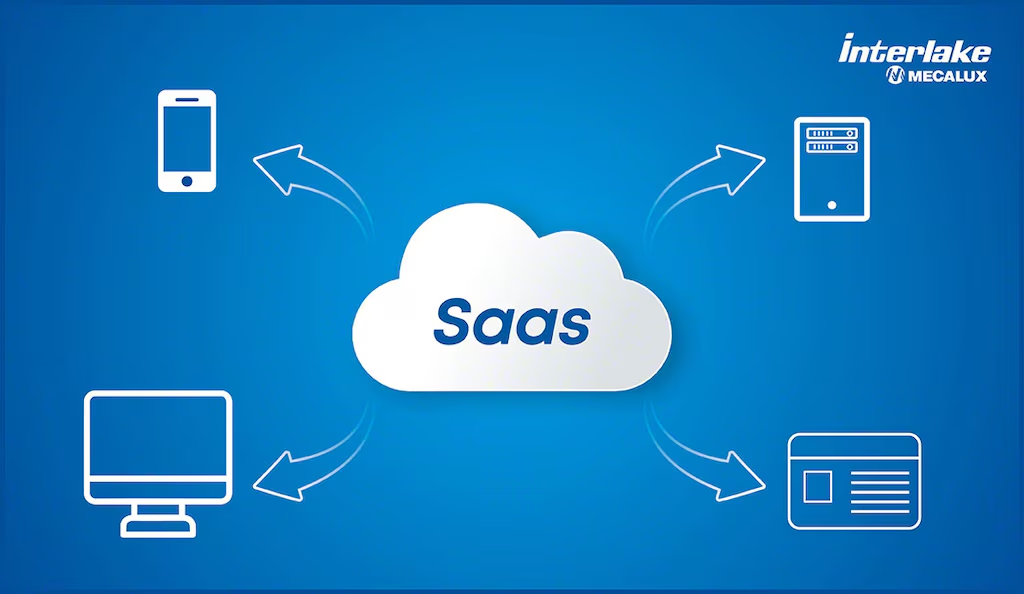
Software as a Service, commonly known as SaaS, is changing how businesses access, use, and manage technology. Instead of purchasing software licenses, installing programs on individual computers, and handling complex infrastructure, companies can access applications through the internet. This shift has made business software more flexible, scalable, and accessible for organizations of different sizes.
From communication and accounting to customer relationship management and project management, SaaS platforms now support many essential business operations. As technology continues to develop, SaaS is becoming an important part of the future of business software.
Understanding the SaaS Business Model
SaaS delivers software through a subscription-based model. Users typically access the application through a web browser or dedicated app, while the provider manages hosting, maintenance, security updates, and infrastructure.
This approach reduces the need for businesses to maintain extensive internal IT systems. Companies can select software based on their needs and often adjust their subscriptions as their requirements change.
For small businesses, this model can be especially useful because it provides access to sophisticated tools without requiring a large upfront investment. A growing company can begin with essential features and expand its software usage as its operations develop.
Greater Accessibility for Modern Businesses
One of the biggest ways SaaS is changing business software is by making applications accessible from almost anywhere with an internet connection. Employees can work from offices, homes, coworking spaces, or while traveling.
This accessibility supports modern hybrid and remote working environments. Teams can collaborate on shared documents, manage projects, communicate with customers, and monitor business information without being tied to a specific computer or office network.
Cloud-based access also helps businesses create more flexible workflows. Employees can use the same applications across different devices, making it easier to maintain productivity when work environments change.
Lower Upfront Technology Costs
Traditional business software often required significant investments in licenses, servers, installation, upgrades, and technical support. SaaS changes this structure by spreading costs through recurring subscriptions.
Businesses can choose plans that match their budgets and operational requirements. This can make advanced software more accessible to startups and small companies that may not have extensive technology budgets.
Subscription models can also provide more predictable expenses. Rather than purchasing a major software upgrade every few years, companies generally pay a recurring fee that includes access to the platform and its ongoing improvements.
Faster Software Updates and Innovation
Another major advantage of SaaS is the ability to deliver updates continuously. Traditional software may require users to download and install major updates manually. SaaS providers can introduce improvements directly through their cloud platforms.
This allows businesses to gain access to new features, performance improvements, security updates, and integrations without completely replacing their existing software.
The faster development cycle also encourages SaaS providers to respond to changing customer expectations. Businesses can therefore benefit from software that evolves alongside their industries.
Better Tools for Small Businesses
SaaS has helped smaller organizations access tools that were once primarily available to larger enterprises. Customer relationship management, accounting, marketing automation, analytics, communication, and scheduling platforms can now be obtained through flexible subscription plans.
For example, Appointment scheduling software for small businesses can simplify the process of managing customer bookings. Instead of relying entirely on phone calls, emails, or manually maintained calendars, businesses can provide customers with convenient online scheduling options.
This type of SaaS solution can help businesses organize appointments, reduce administrative tasks, manage availability, and create a smoother customer experience.
Improved Collaboration Across Teams
Modern businesses often have employees working across different departments and locations. SaaS platforms help these teams share information and coordinate activities through centralized systems.
Project management software can provide shared task lists and deadlines, while communication platforms allow teams to exchange messages and files. Cloud-based document tools enable multiple employees to work with updated information without repeatedly sending attachments.
This connected environment can reduce information silos and help teams coordinate their responsibilities more effectively.
Integration Is Becoming More Important
The future of SaaS is not simply about using individual applications. Businesses increasingly need different platforms to communicate with each other.
Modern SaaS products often provide integrations and application programming interfaces that allow information to move between systems. A customer relationship management platform might connect with an email marketing service, accounting software, payment platform, or scheduling application.
These connections can create more unified workflows. For instance, information collected through an appointment scheduling system can potentially be connected with customer records and communication tools, depending on the available integrations.
Artificial Intelligence and Automation
Artificial intelligence is becoming another important development within SaaS. Many business software providers are adding AI-powered features that can automate repetitive activities, analyze information, generate content, or provide recommendations.
Automation can help employees spend less time on routine administrative work. Scheduling reminders, customer communications, data organization, reporting, and workflow management are examples of areas where automation can provide practical benefits.
As AI technology develops, SaaS applications are likely to become more intelligent and capable of adapting to individual business requirements.
Stronger Focus on Data and Security
As more business information moves to cloud platforms, data security has become a central consideration. SaaS providers invest in infrastructure, access controls, monitoring, encryption, backups, and other security measures to protect customer information.
Businesses still need to evaluate providers carefully. Important considerations can include data protection practices, user permissions, compliance requirements, backup policies, and account security.
The future of SaaS will increasingly depend on maintaining customer trust while providing convenient access to business information.
Scalability for Growing Companies
Business needs can change quickly. A small company may begin with a few employees and eventually expand into multiple locations or markets. SaaS platforms can make this growth easier by allowing organizations to increase users, features, storage, or service levels as needed.
This scalability reduces the pressure to replace entire software systems whenever a business expands. Instead, companies can often adjust their subscriptions and configurations according to changing requirements.
The Future of Business Software
SaaS is moving business software toward greater flexibility, connectivity, automation, and accessibility. Companies no longer need to depend entirely on software installed on local computers or managed through complex internal infrastructure.
Future SaaS platforms are likely to place even greater emphasis on artificial intelligence, automation, personalization, integrations, mobile access, and data-driven decision-making. Businesses will continue looking for software that solves specific problems while fitting naturally into their existing technology ecosystems.
For organizations of all sizes, SaaS represents more than a different way to purchase software. It is changing how companies operate, collaborate, serve customers, and respond to new opportunities. As cloud technology continues to evolve, SaaS will remain an important force shaping the future of business software.