
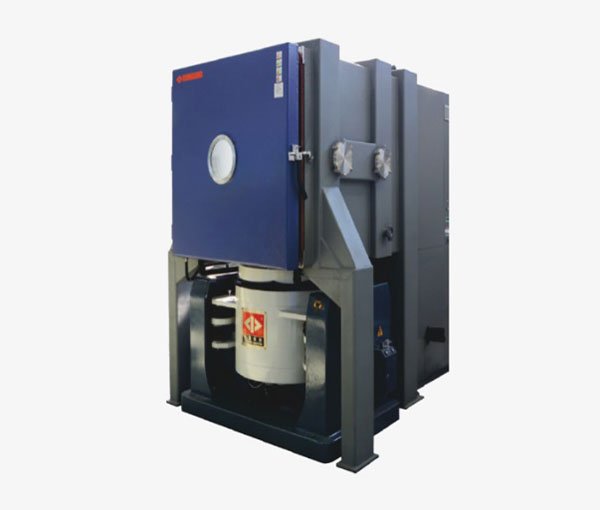
Designing an altitude test chamber requires careful consideration of pressure, temperature, airflow, structural strength, measurement accuracy, and safety. Engineers use these chambers to recreate high-altitude environments under controlled laboratory conditions, allowing products and components to be evaluated before they are exposed to demanding real-world operating conditions.
An altitude test chamber can simulate reduced atmospheric pressure while also controlling temperature and humidity. This makes it useful for aerospace equipment, electronics, automotive components, batteries, communication systems, medical devices, packaging, and other products that may operate at elevated elevations. Successful chamber design begins with understanding the exact environmental conditions a test must reproduce.
Understanding the Purpose of an Altitude Test Chamber
The primary function of an altitude test chamber is to reproduce atmospheric pressure corresponding to a selected altitude. As elevation increases, atmospheric pressure decreases. Equipment designed for aircraft, spacecraft, mountain operations, or other elevated environments may behave differently when exposed to these conditions.
Engineers should first define the intended testing range. Important parameters include minimum pressure, equivalent altitude, chamber volume, temperature range, humidity requirements, test duration, and the size and weight of test articles.
These requirements influence nearly every design decision. A small chamber intended for electronic components may have very different vacuum and thermal requirements from a large chamber designed to test complete assemblies.
Defining the Required Altitude Range
The pressure range should be established early in the design process. Engineers need to determine the lowest absolute pressure the chamber must achieve and how accurately that pressure must be controlled.
The relationship between altitude and pressure is not simply linear. Therefore, control systems should use appropriate atmospheric models or calibrated pressure references when converting pressure measurements into equivalent altitude.
Testing requirements may also specify pressure ramp rates. A chamber designed for gradual altitude changes will have different control requirements from one expected to create rapid pressure transitions.
Determining Chamber Size
Internal dimensions should provide enough room for the test article, instrumentation, fixtures, and necessary airflow. However, increasing chamber volume can significantly increase pumping requirements and affect temperature-control performance.
Engineers should consider not only the dimensions of the product but also access requirements. Doors, feedthroughs, windows, electrical connections, and service ports must be incorporated without compromising chamber integrity.
Structural Design and Pressure Loads
Structural integrity is one of the most important aspects of altitude chamber design. When the chamber operates below external atmospheric pressure, the surrounding atmosphere creates substantial forces on the chamber walls.
The enclosure must therefore be designed to resist external pressure and potential deformation. Cylindrical or spherical geometries can provide favorable structural characteristics, while flat surfaces may require additional reinforcement.
Materials and Construction
Material selection depends on pressure requirements, temperature range, corrosion resistance, cleanliness, and compatibility with the tested products. Stainless steel is commonly considered for chamber construction because of its strength, durability, and resistance to corrosion.
Seals and door systems also require careful selection. A chamber can have a strong enclosure but still perform poorly if seals allow excessive leakage.
Engineers should evaluate gasket materials, door compression, thermal expansion, and repeated cycling. Components exposed to large temperature changes may expand and contract, potentially affecting sealing performance.
Vacuum and Pressure-Control Systems
An altitude test chamber requires a reliable system for reducing and controlling internal pressure. Vacuum pumps, valves, sensors, piping, and control software must work together to maintain the desired test profile.
Pump selection should account for chamber volume, required pressure, leakage rate, and desired evacuation time. A pump that is too small may produce slow evacuation, while an unnecessarily large system can increase cost and control complexity.
Pressure-control valves are equally important. Precise throttling allows engineers to create repeatable pressure profiles and avoid unwanted pressure fluctuations.
Managing Leakage
Leakage is a major consideration in low-pressure testing. Even small leaks can become significant when testing at very low pressures.
Leak testing should therefore be included during commissioning and maintenance. Engineers can use pressure-decay testing or other suitable methods to determine whether the chamber meets its specified leakage performance.
Temperature and Thermal Management
Many altitude tests combine reduced pressure with temperature extremes. At low pressure, heat transfer through convection changes significantly. This can make thermal management more challenging than conventional environmental testing.
Engineers should consider conduction, radiation, and the reduced role of convection when designing the chamber’s thermal system.
Heating and cooling systems must also be compatible with the pressure environment. Temperature sensors should be positioned to accurately represent conditions around the test article rather than simply measuring chamber-wall temperature.
Temperature Uniformity
Temperature uniformity can affect test results. Uneven temperatures may cause some parts of a product to experience different conditions from others.
Proper chamber insulation, airflow design, heater placement, cooling-system configuration, and sensor positioning can help improve uniformity. Testing should verify the actual chamber performance rather than relying only on theoretical calculations.
Instrumentation and Data Collection
Accurate sensors are essential for meaningful altitude testing. Typical instrumentation may include absolute pressure sensors, temperature sensors, humidity sensors, vacuum gauges, and electrical measurement systems.
Sensor selection should match the expected operating range and required accuracy. Calibration is also important because measurement errors can lead to incorrect conclusions about product performance.
Feedthroughs allow engineers to connect test equipment inside the chamber with external data-acquisition systems. These interfaces should be designed carefully to maintain chamber integrity while supporting the required electrical, optical, pneumatic, or mechanical connections.
Control Systems and Automation
Modern altitude test chambers often rely on programmable control systems. Automated controls can regulate pressure, temperature, and test duration while recording data throughout the test.
A well-designed system should allow engineers to establish test profiles, monitor critical variables, configure alarms, and stop testing when unsafe conditions occur.
Automation can also improve repeatability. When the same pressure and temperature sequence is executed consistently, engineers can compare results between different products or test cycles more effectively.
Safety Considerations
Safety must remain central to chamber design. Engineers should account for pressure differentials, door interlocks, electrical hazards, thermal hazards, and possible failure of mechanical or control components.
The chamber door should not be capable of being opened under unsafe pressure conditions. Emergency shutdown systems should be designed so that critical equipment can be placed into a safe state quickly.
Engineers should also consider what happens during power failure, sensor malfunction, pump failure, or loss of cooling. Fail-safe behavior can prevent equipment damage and reduce risks to personnel.
Testing, Calibration, and Maintenance
An altitude test chamber should be validated before it becomes part of a regular testing program. Calibration checks should confirm pressure and temperature measurement accuracy, while performance testing can establish evacuation rates, leakage behavior, and temperature uniformity.
Routine maintenance should include inspection of seals, valves, pumps, sensors, electrical connections, and chamber surfaces. Preventive maintenance can help identify problems before they affect test results.
Documentation is equally important. Engineers should maintain records of calibration, repairs, chamber performance, and test configurations. These records provide traceability and help identify changes in performance over time.
Final Considerations for Engineers
Designing an altitude test chamber is a multidisciplinary engineering task. Mechanical strength, vacuum performance, thermal behavior, instrumentation, automation, safety, and maintenance all need to work together.
The most effective approach is to begin with clearly defined test requirements and then develop the chamber around those conditions. Engineers should avoid focusing only on the maximum altitude or minimum pressure. Chamber volume, evacuation speed, leakage, thermal performance, sensor accuracy, control response, and safety features can all influence the quality of the final testing system.
A properly engineered altitude test chamber provides a controlled environment in which products can be evaluated under realistic atmospheric conditions. By considering structural design, pressure control, thermal management, instrumentation, automation, and long-term maintenance from the beginning, engineers can create a reliable testing platform that produces consistent and useful results.