
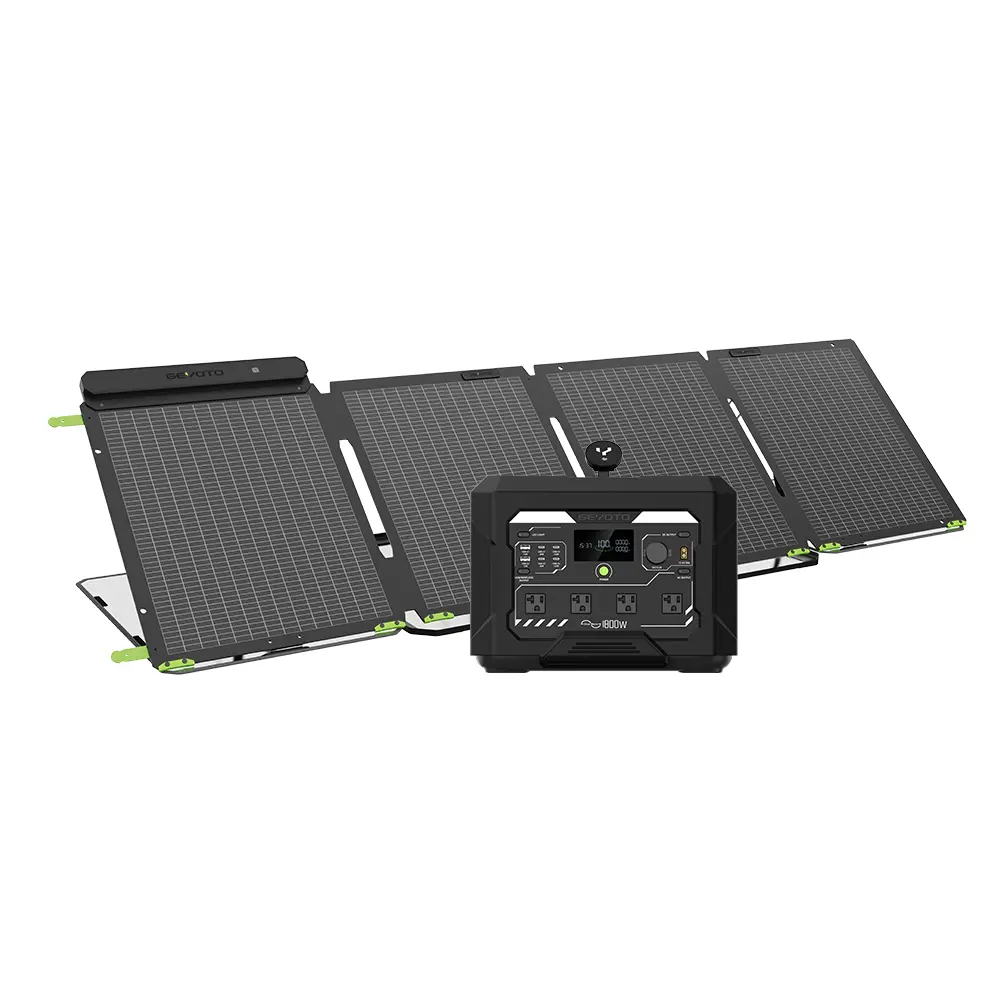
Understanding Whether a Portable Power Station Can Run a Refrigerator
When a power outage hits, one of the first concerns for any household is food preservation. Refrigerators are essential for keeping groceries safe, but they also require a steady source of electricity. This leads many people to ask: can a portable power station run a refrigerator during an outage?
The short answer is yes—many modern portable power stations can run a refrigerator, but the real answer depends on several important factors such as battery capacity, refrigerator size, compressor startup surge, and runtime expectations. Understanding these details is key before relying on a portable power solution in an emergency.
A portable power station is essentially a large rechargeable battery system equipped with AC outlets, USB ports, and sometimes solar charging capabilities. Unlike traditional gas generators, it operates silently and produces no fumes, making it ideal for indoor use. However, not all models are equally powerful, and refrigerators can be demanding appliances due to their compressor cycles.
How Refrigerators Consume Power
To determine can a portable power station run a refrigerator, you first need to understand how refrigerators use electricity. A typical household refrigerator does not draw constant power. Instead, it cycles on and off throughout the day.
Most standard refrigerators consume between 100 to 800 watts while running, depending on size, age, and efficiency. However, the most critical factor is the startup surge. When the compressor kicks in, the refrigerator may temporarily require 2 to 3 times its running wattage. For example, a 200-watt running fridge might need 600 watts or more at startup.
This surge is where many small portable power stations fail. Even if they can handle the running wattage, they may shut down when the compressor starts.
Energy consumption is usually measured in watt-hours (Wh). A typical refrigerator may use 1,000 to 2,000 Wh per day. This means that if you want to keep it running for several hours during an outage, your power station must have enough stored energy.
What Size Power Station Do You Need
When evaluating can a portable power station run a refrigerator, capacity is one of the most important considerations. Portable power stations are rated in watt-hours, which indicates how much energy they can store.
For small mini-fridges or compact refrigerators, a 300Wh to 500Wh unit might be enough for short-term backup. However, for standard full-size refrigerators, you typically need at least 1000Wh to 2000Wh capacity for meaningful runtime.
Here’s a simple breakdown:
Small fridge (mini fridge or bar fridge): 300Wh–500Wh power station may run it for several hours
Medium refrigerator: 500Wh–1000Wh power station may run it for 4–10 hours intermittently
Full-size refrigerator: 1000Wh–3000Wh power station is recommended for extended backup
It’s also important to consider efficiency losses. In real-world conditions, inverter losses can reduce usable power by 10–20%, meaning you should always choose a slightly larger capacity than your minimum estimate.
Power Output and Surge Capacity Matter
Another key factor in answering can a portable power station run a refrigerator is the output wattage and surge rating. Even if your power station has enough stored energy, it must also be able to deliver that energy fast enough when the refrigerator starts.
Look for two important specifications:
Continuous output wattage: This is the steady power the unit can supply
Surge wattage: This is the short burst of power needed to start appliances like refrigerators
For example, if your fridge needs 600 watts to start and 150 watts to run, your power station should ideally provide at least 600–1000 watts of surge capacity and 200–500 watts continuous output.
Many modern lithium-based power stations are designed with pure sine wave inverters, which are safer and more efficient for sensitive appliances like refrigerators. This ensures smooth operation without damaging the compressor.
How Long Can a Portable Power Station Run a Refrigerator
The runtime depends on both the refrigerator’s consumption and the battery size. If you are still wondering can a portable power station run a refrigerator for an entire outage, the answer depends on how long the outage lasts and how large your power station is.
For example:
A 1000Wh power station running a 150W fridge might last around 6 to 7 hours continuously
The same unit running a cycling refrigerator (compressor not always on) may last 10 to 14 hours
A 2000Wh unit could potentially power a refrigerator for 12 to 24 hours depending on usage patterns
Realistically, refrigerators do not run constantly, which helps extend battery life significantly. In many cases, users can preserve food overnight or through short outages with a properly sized power station.
Tips to Maximize Efficiency During an Outage
If your goal is to confidently answer can a portable power station run a refrigerator in real-life emergencies, efficiency strategies are just as important as hardware.
One effective method is to avoid opening the refrigerator door frequently. Every time you open it, cold air escapes and the compressor must work harder. Pre-cooling the refrigerator before an expected outage can also reduce energy consumption.
Another strategy is to use eco modes if your power station includes them. These modes optimize power delivery and reduce waste. You can also prioritize powering only the refrigerator and disconnect other devices to conserve energy.
If you have a solar-compatible power station, pairing it with solar panels can significantly extend runtime during prolonged outages. Even a few hours of sunlight can add meaningful backup energy.
Limitations and What to Watch Out For
While it is true that can a portable power station run a refrigerator, there are limitations you should be aware of. Smaller or budget models may struggle with surge demands, causing shutdowns or overload warnings.
Older refrigerators are also less efficient and require more energy, making them harder to support with portable systems. In extremely hot environments, the compressor will work harder, reducing battery life.
Another limitation is long-term outage scenarios. While portable power stations are excellent for short-term backup, they may not replace fuel-powered generators for multi-day blackouts unless combined with solar recharging.
Final Thoughts
So, can a portable power station run a refrigerator? Yes, it absolutely can—provided you choose the right size, understand your refrigerator’s power requirements, and manage energy usage wisely.
For short outages, even mid-sized power stations can keep food safe and reduce waste. For longer emergencies, higher-capacity systems paired with solar charging offer a more reliable solution.
The key is preparation. Once you match your refrigerator’s needs with the right portable power station, you gain a quiet, safe, and highly practical backup power solution that keeps your essentials running when the grid goes down.